Cashless Approved but Hospital Wants a Deposit?
Your insurer approved cashless treatment, yet the admission desk is demanding a ₹50,000 deposit before they will admit your parent. This happens more often than families expect, and it is usually legal. Here is why it happens, when you can refuse, how much you should actually pay, and exactly how to get the deposit back at discharge.


Written by Kshitij JainReviewed by Harsh SoniUpdated nyvo insurance Services LLP, IRDAI Corporate Agent (Composite) CA1085Salaried advisors, no commission-based ranking
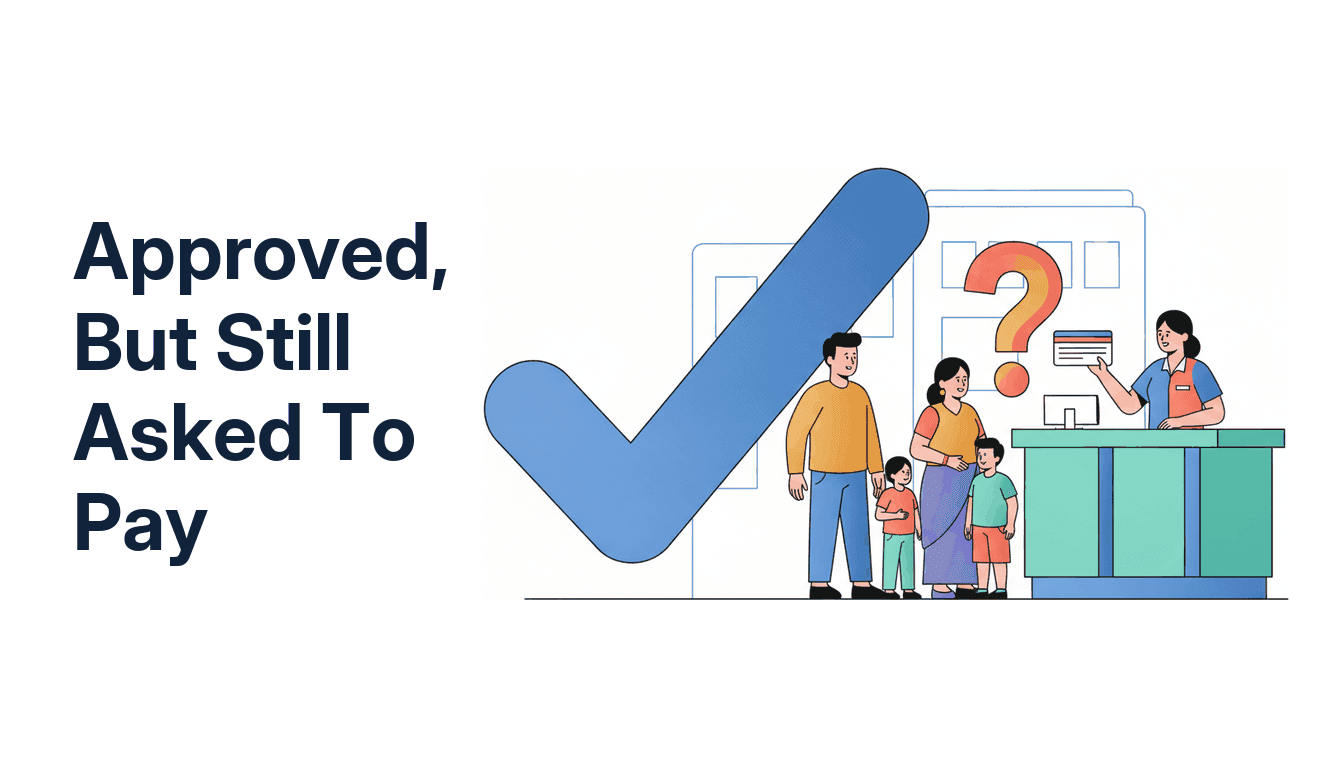
The cashless approval message arrived on your phone at 2:40 pm. Relief. You showed it to the admission desk, expecting them to wave your mother through. Instead the executive slid a form across the counter: "Initial deposit, fifty thousand. You can pay by card."
You are now standing at a hospital counter, holding written proof that your insurer has approved cashless treatment, being asked to pay fifty thousand rupees anyway. It feels like a contradiction, or a scam. It is usually neither.
I have stood at this exact counter, on the phone, with more families than I can count. The deposit demand is one of the most common and most upsetting moments in the whole cashless journey, precisely because it comes right after the relief of approval. Here is what is actually happening, and what to do about it.
The short answer
When a hospital asks for a deposit despite a cashless approval, it is almost always because the insurer's initial approval is a partial, provisional amount – not the full estimated cost of treatment. The hospital takes a deposit to cover the gap between that initial approval and the expected final bill, plus any items the policy will not pay for. In most cases this deposit is legitimate and refundable. You should pay a reasonable amount, get a numbered receipt, insist the hospital keep filing enhancement requests to the insurer, and reconcile everything at discharge so the deposit comes back. You do not simply hand over whatever number they say.
Why the deposit exists even after approval
Cashless approval is not one decision. It is a running conversation between the hospital and the insurer that lasts the whole admission. Understanding that changes everything.
The first approval is deliberately small. When the hospital sends the pre-authorisation request, the insurer approves an initial amount based on the provisional diagnosis – often a fraction of what the treatment will finally cost. A cardiac admission that will bill ₹3 lakh might get an initial approval of ₹75,000. The insurer is not being stingy; this is standard practice. As treatment progresses, the hospital files enhancement requests and the insurer approves more in stages.
So at the moment of admission, the hospital is looking at an approval of ₹75,000 and a likely bill of ₹3 lakh. The deposit covers their exposure on that gap until the enhancements come through.
Some items will never be on the insurer's tab. Every policy has non-payable items – consumables, certain disposables, items outside the room category you are entitled to. The hospital knows it will have to collect these from you directly at discharge, so it front-loads a deposit.
The hospital carries the credit risk. In cashless, the hospital treats now and gets paid by the insurer later, sometimes weeks later, occasionally after a dispute. The deposit is its buffer against the parts of the bill the insurer ultimately disallows.
None of this is hidden in the fine print to cheat you. It is how the cashless model is built. But hospitals vary enormously in how much they demand, and that is where you have room to push.
When the deposit is legitimate – and when to push back
Pay a reasonable deposit when: the initial approval is clearly far below the expected bill, the hospital gives you a written, numbered receipt, and the amount is proportionate to the gap. This is normal.
Push back firmly when:
- The demand equals or exceeds the full estimated bill despite a cashless approval being in hand. If they have approval for ₹75,000 on a ₹1.5 lakh procedure, a ₹1.5 lakh deposit makes no sense – the approval should be doing its job.
- They ask for the deposit in cash with no receipt. Never do this. Insist on a card payment or a properly numbered receipt against your name and the patient's UHID.
- They refuse to file enhancement requests and tell you to "just pay and claim reimbursement later." This is the one to fight hardest. It converts your cashless claim into a reimbursement claim, which means you fund the entire treatment yourself and chase the money for weeks.
- It is a network hospital and they are treating you as if it is not. On the insurer's own network, the cashless machinery should be working smoothly.
What to do at the counter, in order
- Call the insurer's 24/7 cashless helpline yourself. Do not rely on the hospital desk to relay. Confirm the initial approved amount, ask whether enhancement requests can be raised as the bill grows, and ask the insurer directly: "Is a deposit expected on a cashless admission for this policy?" A direct policyholder call carries weight.
- Ask the hospital for the treatment cost estimate in writing. This single document reframes the negotiation. Once you can see the estimate against the approval, the size of a fair deposit becomes obvious.
- Pay a proportionate deposit, by card, against a numbered receipt that records the patient's name and UHID. Photograph the receipt immediately.
- Get the hospital insurance desk to commit, in writing or by email, to filing enhancement requests as the bill rises. This is the promise that protects your cashless status.
- Start a log. Every reference number, every name, every amount, every time. At discharge this log is what gets your deposit reconciled correctly.
At the counter right now and unsure what to pay? If a hospital is demanding a deposit you can't make sense of, talk to us before you pay. Our claims team will tell you what's fair, what to refuse, and what to say to the desk – in real time.
Getting the deposit back at discharge
The deposit is refundable to the extent the insurer's final settlement covers the bill. At discharge, the reconciliation runs like this:
- The hospital prepares the final bill.
- The insurer issues the final cashless approval, having processed all enhancements.
- The hospital adjusts your deposit against the portion the insurer does not pay – genuine non-payable items, any sub-limit or co-pay excess.
- Whatever is left of your deposit is refunded to you, usually to the card or account you paid from.
Two things decide whether you get the full refund you are owed. First, did the hospital actually file every enhancement, so the insurer paid the maximum it should have? Second, is the final bill clean, or is it padded with inflated or non-payable line items that the insurer disallowed and the hospital is now trying to recover from your deposit? This is where a discharge-time bill audit pays for itself – we walk through it in the Hospital Bill Audit Guide. If the deductions look wrong, the deposit refund is where you feel it, so check the line items before you sign.
If the refund is delayed, ask for the refund reference and a timeline in writing, and escalate to the insurer if the hospital has over-recovered against items the insurer actually paid.
Don't let a deposit quietly disappear into a padded bill. Most families never reconcile the deposit against the final settlement, and lose thousands. Our advisors review your discharge bill line by line so the refund you're owed actually comes back.
FAQs
Is it legal for a hospital to charge a deposit when cashless is approved?
Yes, in most cases. Cashless approval is typically an initial, partial sanction, not a guarantee of the full final bill. Hospitals are allowed to collect a refundable deposit to cover the gap and any non-payable items. What is not acceptable is demanding the full bill amount as a deposit despite an active approval, or refusing to file enhancement requests.
How much deposit is reasonable?
It should be roughly proportional to the gap between the initial approved amount and the expected bill, plus a reasonable buffer for non-payable items. If the approval already covers most of the estimate, the deposit should be small. Always ask for the written cost estimate so you can judge.
Can I refuse to pay the deposit entirely?
You can try, especially on a network hospital with a clear approval, but the hospital can decline a fully cashless admission and ask you to pay and claim reimbursement instead. The practical move is to pay a fair, receipted deposit and insist the hospital keeps the cashless claim alive through enhancement requests.
What if I pay the deposit and the hospital still treats it as a reimbursement claim?
Get everything in writing, keep every original bill and receipt, and file the reimbursement claim promptly. Then escalate – first to the insurer's grievance cell, and if needed through the Insurance Ombudsman. A network hospital flipping an approved cashless case to reimbursement without cause is exactly the kind of grievance the system exists to fix.
Will I get the whole deposit back?
You get back the portion of the deposit not consumed by genuine non-payable items, co-pay or sub-limit excess. If the hospital filed all enhancements and the final bill is clean, the refund should be substantial. If the bill is padded with disallowed items, that is what eats into your refund – which is why the discharge audit matters.
Related guides:
Sources:
- IRDAI Master Circular on Health Insurance Business, Reference No. IRDAI/HLT/CIR/PRO/84/5/2024, 29 May 2024
- IRDAI Cashless Everywhere framework, 23 January 2024
- nyvo claims-support experience across 1,500+ Indian families

Alumni of IIT Delhi and IIM Ahmedabad. Former consultant at BCG and part of the strategy team of slice. Founder of nyvo and IRDAI Certified Insurance Advisor.