Reimbursement Health Insurance Claim Checklist India
Reimbursement claim checklist: documents to collect at discharge, submission deadlines, and how to avoid deductions. Settlement in 45-60 days.


Written by Harsh SoniReviewed by Shadab SayeedUpdated nyvo insurance Services LLP, IRDAI Corporate Agent (Composite) CA1085Salaried advisors, no commission-based ranking
What is a Reimbursement Health Insurance Claim and How Does it Work?
A reimbursement health insurance claim is a process where you pay the full hospital bill at discharge (out of pocket) and then submit all original bills, reports, and documents to your insurer for repayment. This is used when you're admitted to a non-network hospital, when cashless pre-auth fails, or when the hospital doesn't support cashless processing.
According to IRDAI and TPA data, approximately 30–35% of all health insurance claims in India are processed as reimbursement (the rest being cashless). The average reimbursement claim takes 45–60 days from submission to bank transfer, though well-documented claims at leading insurers can settle in 30–40 days. The most common reasons for reimbursement delays or deductions are: missing itemized bills (~25% of cases), missing prescriptions or diagnostic reports (~20%), unclear diagnosis notes or inconsistent dates (~15%), and late submission beyond the insurer's deadline (typically 30–90 days from discharge). A well-organized document folder collected at discharge is the single most important factor in smooth reimbursement.
Back to: Health insurance claims guide
Quick checklist
- Goal: prepare complete documentation for reimbursement claims (outpatient or non-cashless admissions).
- Avoid: submitting incomplete bills, missing prescriptions, or undated medical reports.
- Prefer: submitting all original bills, receipts, prescriptions, and medical reports in chronological order.
- Claims-first: file reimbursement within 90 days of discharge; delays risk documentation loss.
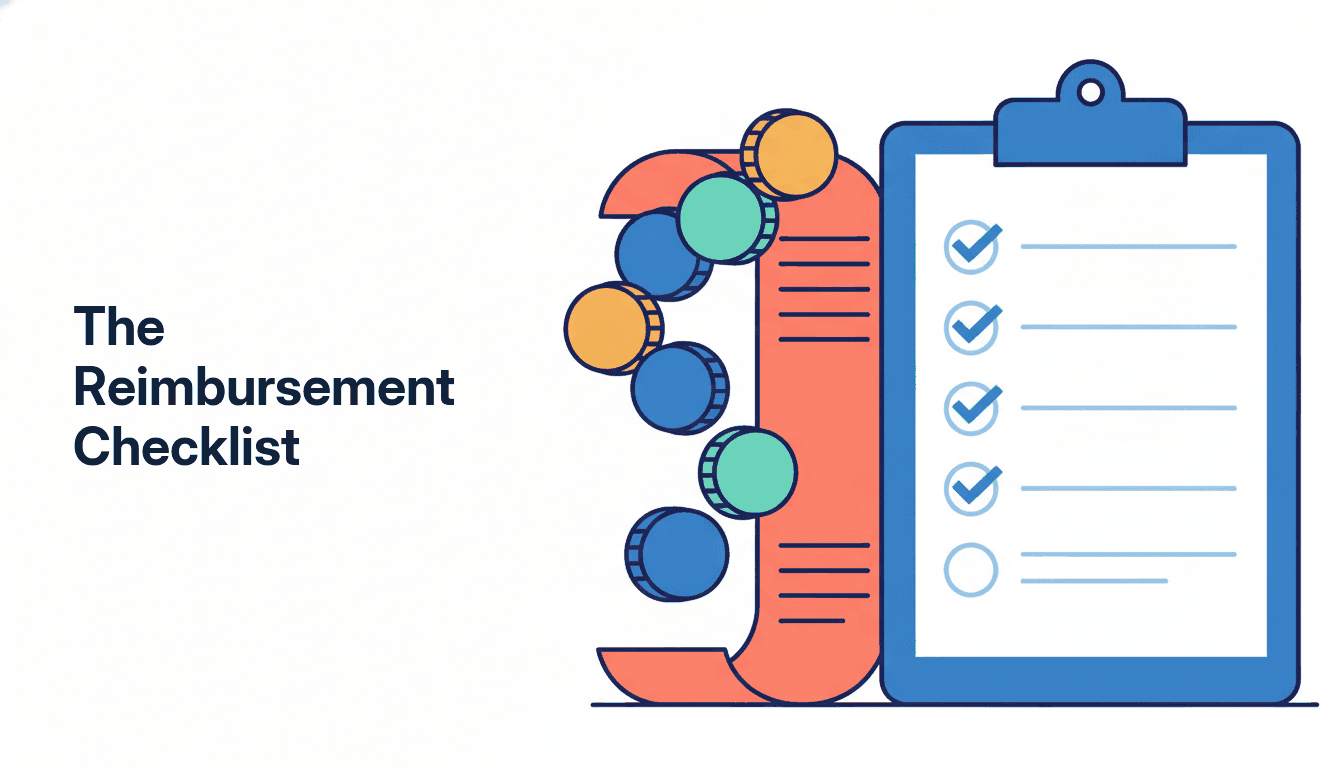
Minimum document checklist (save this)
| Category | Documents |
|---|---|
| Hospital | Discharge summary, final bill, itemized bill, payment receipts |
| Medical | Doctor prescriptions, consultation notes, diagnostic reports |
| Pharmacy | Pharmacy invoices + medicine stickers (if available) |
| Claim | Claim form, ID proof, policy copy/e-card |
| Bank | Cancelled cheque / bank details |
Reimbursement claim: step-by-step checklist
A) Before discharge (don’t skip)
- Ask for itemized bill (not just final bill)
- Ask for stamped/signed copies where possible
- Ensure discharge summary mentions diagnosis, procedure, dates, and doctor details
B) At discharge
Collect and keep copies:
- Discharge summary
- Final bill + itemized bill
- Payment receipts
- Investigation reports (lab/radiology)
- Doctor prescriptions and notes
- OT notes / implant stickers (if relevant)
- Hospital registration card / admission note (if available)
C) After discharge (submission)
- Inform insurer/TPA if intimation is required for your policy
- Fill claim form carefully (match dates/diagnosis spelling)
- Submit within deadline (varies by insurer; don’t delay)
- Keep proof of submission (acknowledgement number, email trail)
D) If you receive a “query letter”
- Reply quickly (same day if possible)
- Share clear scans and a short cover note
- If a document is unavailable, request the hospital for duplicates and explain delay
Common deductions in reimbursement (and how to reduce them)
- Non-medical/consumables: ask hospital for a separated bill; understand policy non-payables
- Room rent limit: can cause proportionate deductions
- Co-pay: fixed % paid by you
Helpful reads:
When reimbursement is the better option
- Non-network hospital
- Cashless not available due to system issues
- Pre-auth denied but treatment is urgent
If pre-auth is denied: What to do next
FAQs
Can I submit photocopies?
Usually you can submit copies/scans, but keep originals safe – insurers may ask for verification.
What if I lost a bill?
Request duplicates from hospital/pharmacy. If not possible, explain in writing; settlement may be reduced.
Is pre-intimation required for reimbursement?
Sometimes yes. Check policy conditions; when in doubt, intimate.
Will I get 100% of my hospital bill reimbursed?
Not always – non-payables, limits, co-pay, exclusions, and room-rent deductions can reduce payout.
What’s the most important document?
The discharge summary + itemized bill combination is critical.
Can I claim for OPD expenses in reimbursement?
Usually OPD is not covered in standard indemnity policies unless specifically included.
What if the insurer keeps asking repeated queries?
Escalate via grievance with an email trail: Grievance process + template
What if the claim gets rejected?
Start here: Claim rejection reasons (and fixes)
Related Guides
Disclaimer: Educational content. Always check your insurer’s timelines and required formats.
Our editorial principles
- Salaried advisors, not commission-linked: we focus on clarity and suitability, not product hype.
- No spam: we don't sell your data; we keep advice simple and actionable.
- Claims-first: policy features are evaluated by how they behave during claims.
- Education-first: this content is for informational purposes only.

16+ years in financial services. Former investment banker at Bank of America, Kotak Investment Banking, and SBICaps, and ex-CFO of slice. Founder of nyvo and Principal Officer – IRDAI Certified.