Pre-auth Denied Health Insurance India
Pre-auth denied? Get the reason in writing, resubmit with better docs, or switch to reimbursement. 40-50% of denials are reversible.

The fuller guide: Cashless Pre-Auth Denied: The Full Playbook covers this in more depth and is kept the more current of the two.
What to Do When Pre-Authorization is Denied in Health Insurance?
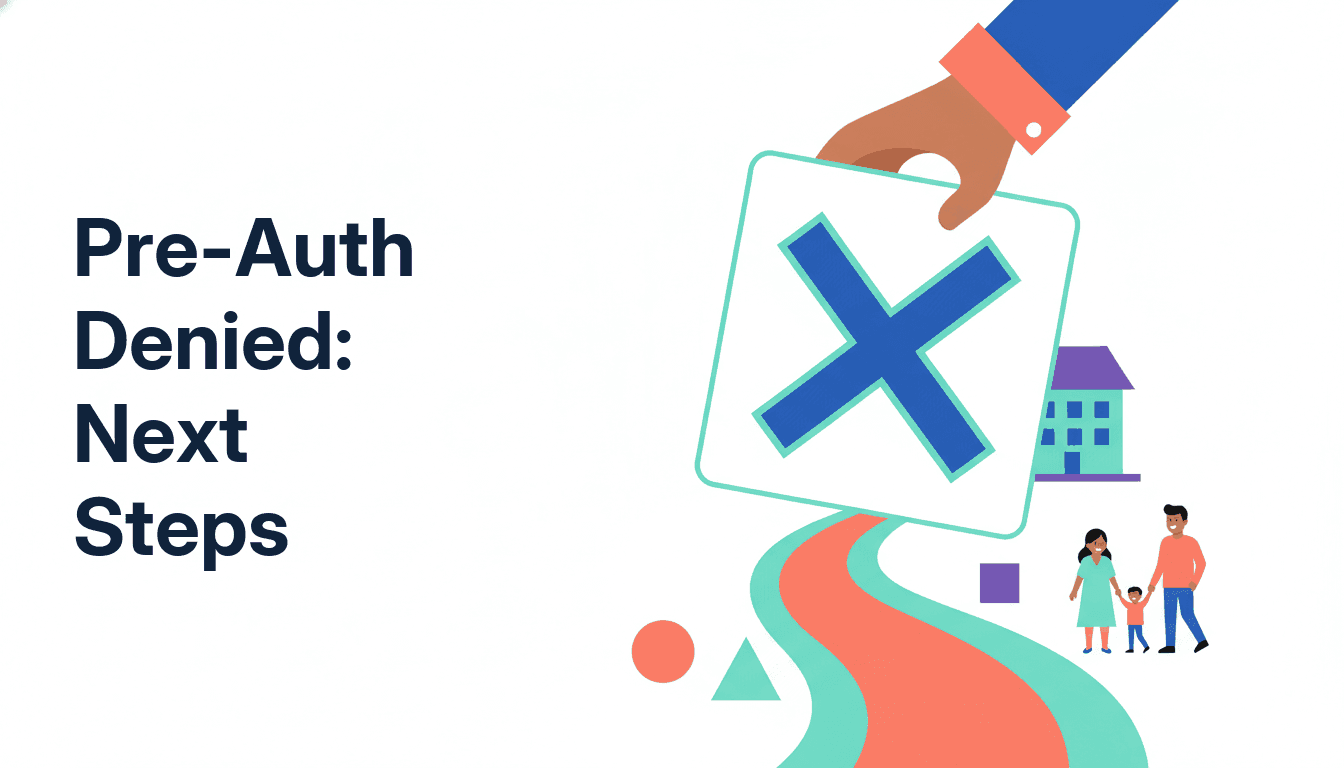
Pre-authorization (pre-auth) denial in health insurance occurs when the TPA or insurer rejects the hospital's request to approve cashless treatment for a specific hospitalization. A pre-auth denial means the insurer will not settle the hospital bill directly - but it does not mean the treatment won't be covered at all. Many denials are reversible with better documentation, and you can always switch to reimbursement mode.
According to industry data, approximately 15–20% of initial pre-auth requests face denial or partial approval, with the most common reasons being: insufficient clinical documentation (~35% of denials), waiting period/PED not completed (~25%), procedure excluded under policy terms (~20%), and room category mismatch (~10%). Critically, approximately 40–50% of denied pre-auths are successfully reversed when the hospital resubmits with clearer clinical notes, updated investigation reports, or corrected procedure codes. The key: act within 60 minutes - get the denial reason in writing, verify if it's fixable, and either resubmit or switch to reimbursement while preserving every document.
Back to: Health insurance claims guide
Quick checklist
- Goal: understand why pre-auth was denied; challenge if denial is unjustified.
- Avoid: accepting denial without asking for written reason; some denials are reversible on appeal.
- Prefer: requesting detailed denial reason in writing; provide additional medical info if needed.
- Claims-first: if claim goes ahead despite denial, save all documents; file claim with denial letter.
Quick “next 60 minutes” checklist
| Action | Who | Why |
|---|---|---|
| Get denial reason (written) | Hospital insurance desk | You need a specific reason to fix |
| Call insurer/TPA | Attendant/relative | Confirm reason and resubmission path |
| Improve clinical notes | Treating doctor/hospital | Many denials are “insufficient information” |
| Check waiting periods/exclusions | You/NYVO | Avoid wasting time if genuinely not covered |
| Prepare reimbursement backup | You | Treatment shouldn’t wait unnecessarily |
Common reasons pre-auth gets denied
- Policy is in initial waiting period or specific disease waiting period
- PED suspected + waiting period not completed
- Procedure excluded or not covered
- Hospital submitted insufficient/unclear documents
- Room category mismatch
Useful reads:
How to resubmit pre-auth effectively
- Ensure diagnosis and proposed procedure are clearly stated
- Attach investigation reports and doctor notes
- If insurer needs justification, ask the doctor to add a short clinical rationale
- If estimate increases, request enhancement early
If you must proceed without cashless
- Pay and keep every bill/report
- Intimate insurer as per policy
- File reimbursement promptly
Use: Reimbursement claim checklist
FAQs
Can we change hospitals to get cashless?
Sometimes yes, if another network hospital can process cashless and time permits.
Who should talk to insurer/TPA-the doctor or family?
The hospital insurance desk usually coordinates; family should also call for confirmation and escalation.
What if the insurer says “PED” but we disclosed it?
Ask for the basis and provide proof of disclosure and medical timeline.
Can we request partial cashless?
Yes, sometimes partial approval is possible.
Does room category affect pre-auth?
It can, because estimate and eligibility depend on room category.
If we proceed urgently, will reimbursement definitely be paid?
Not “definitely”-it still depends on policy terms, but proper documents increase success.
When should we escalate to grievance?
If denial reasons are unclear, inconsistent, or timelines are unreasonable.
Disclaimer: Educational content. Always prioritize medical urgency and follow insurer/TPA instructions.
Related Guides
- Pillar: Health insurance claims guide
- Siblings: Cashless checklist • Claim rejection reasons
- Cross-cluster: Health insurance guide
Our editorial principles
- Salaried advisors, not commission-linked: we focus on clarity and suitability, not product hype.
- No spam: we don't sell your data; we keep advice simple and actionable.
- Claims-first: policy features are evaluated by how they behave during claims.
- Education-first: this content is for informational purpose only.
Book a call for advice on the best policy for you and your family
A salaried, IRDAI-certified NYVO advisor will look at your cover, flag the gaps that matter, and tell you plainly what to fix. No commission, no pressure.

16+ years in financial services. Former investment banker at Bank of America, Kotak Investment Banking, and SBICaps, and ex-CFO of slice. Founder of NYVO and Principal Officer - IRDAI Certified.