Cashless Claim Process: What Actually Happens (Step by Step)
What actually happens in a cashless claim, step by step: pre-auth, the TPA, hospital desk, approvals and discharge. The real timeline and what to expect at each stage.

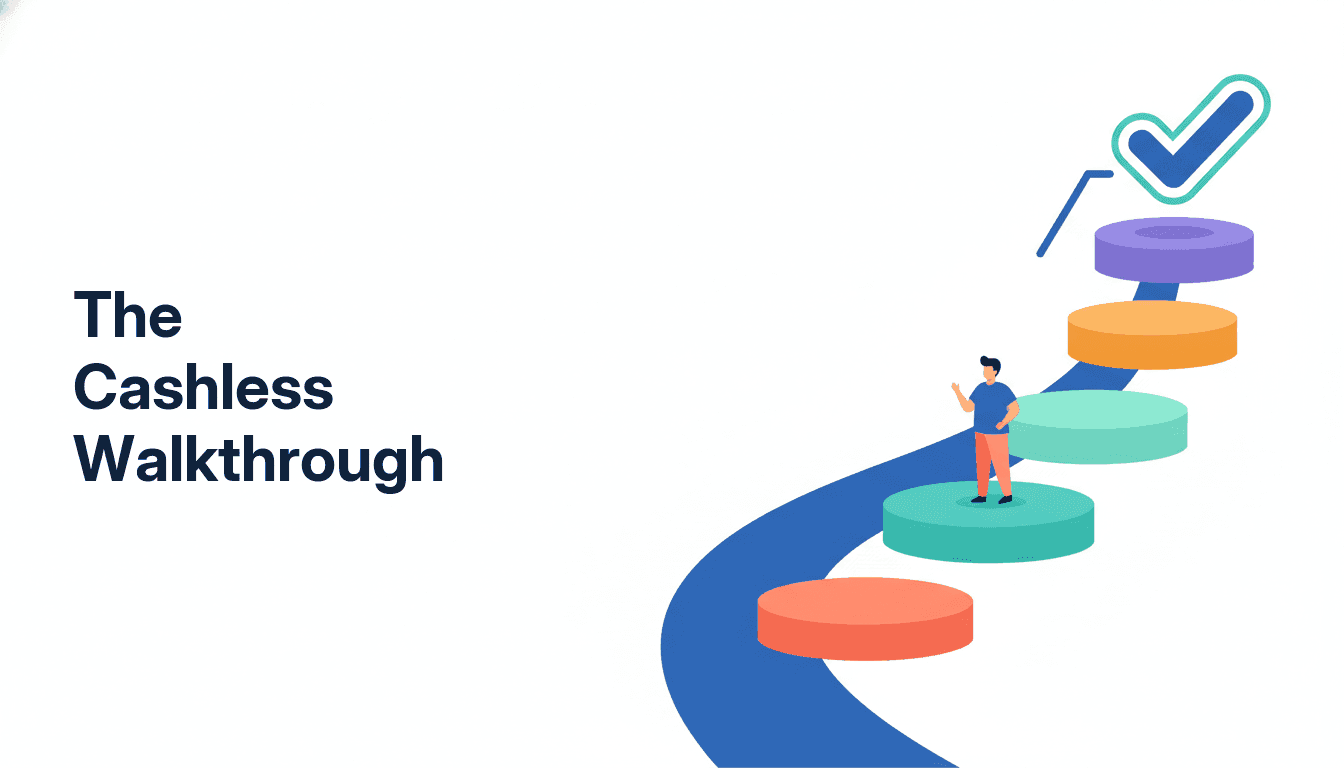
What Actually Happens During a Cashless Claim
A cashless claim sounds simple – the insurer pays the hospital directly. In practice, there are multiple steps, multiple people involved, and multiple points where things can slow down or go wrong. This walkthrough covers what happens at each stage, based on how the process actually works in Indian hospitals.
Understanding this process before you need it saves time, stress, and money. Most claim disputes happen because patients don't know what to expect or what to ask for.
Back to: Health insurance claims guide | Cashless claim checklist
The Timeline: What Happens When
| Time | What Happens | Who's Involved |
|---|---|---|
| Hour 0 | You arrive at hospital | You + hospital reception |
| Hour 0–1 | Insurance desk submits pre-auth | Hospital TPA desk + your insurer's TPA |
| Hour 1–6 | Pre-auth reviewed and approved/denied | Insurer's claim team |
| During stay | Treatment proceeds; enhancement if costs rise | Doctor + hospital + insurer |
| Discharge day | Final bill prepared; insurer settles approved amount | Hospital billing + TPA |
| Day 1–30 | Final settlement; balance adjustment if any | Insurer + you |
Stage 1: Arriving at the Hospital
What you do:
- Go to the insurance/TPA desk – not the regular billing counter
- Share your e-card or policy number, a photo ID (Aadhaar/PAN), and your insurer's TPA name
- Confirm the hospital is in-network for your specific insurer and plan
What the hospital does:
- Verifies your policy is active
- Checks if your plan covers the treatment
- Initiates a pre-authorization request to your insurer's TPA
What can go wrong:
- Hospital is not in your network – you'll need to pay upfront and file a reimbursement claim later
- Insurance desk is closed (nights/weekends at smaller hospitals) – ask billing to contact TPA directly
- Policy number not recognized – keep a physical copy of your policy document as backup
Stage 2: Pre-Authorization (The Critical Step)
Pre-auth is when the hospital tells your insurer: "This patient needs X treatment, estimated cost is Y, please approve."
What the hospital submits:
- Patient details and policy number
- Diagnosis and proposed treatment plan
- Estimated cost breakdown
- Doctor's recommendation and clinical notes
What the insurer reviews:
- Is the policy active and premiums paid?
- Is this treatment covered under the plan?
- Has the waiting period been completed for this condition?
- Is the estimated cost reasonable for this procedure?
The deadline, and what actually happens
IRDAI sets the clock and it does not stop for weekends. Under the Master Circular on Health Insurance Business (29 May 2024) the insurer must decide a planned pre-authorisation within 1 hour and an emergency one within 3 hours, with final authorisation at discharge within 3 hours of the discharge request.
| Situation | Regulatory deadline | What often happens |
|---|---|---|
| Planned admission (elective surgery) | 1 hour | Longer at hospitals with a slow insurance desk |
| Emergency admission | 3 hours | Usually expedited, and treatment starts regardless |
| Complex cases (high-cost, ICU) | Same deadlines apply | Queries add delay; the clock pauses while a query is open |
| Weekend or holiday | Same deadlines apply | Thinner staffing on both sides, but there is no weekend exemption |
If a planned authorisation passes an hour with no query raised, that is a breach, not a queue. Quote the circular and ask the insurer's helpline to escalate.
What can go wrong:
- Partial approval – insurer approves ₹3L of a ₹5L estimate. The hospital may ask you to pay the gap upfront or request an enhancement.
- Query raised – insurer asks for more documents (previous medical records, specific test results). This delays approval.
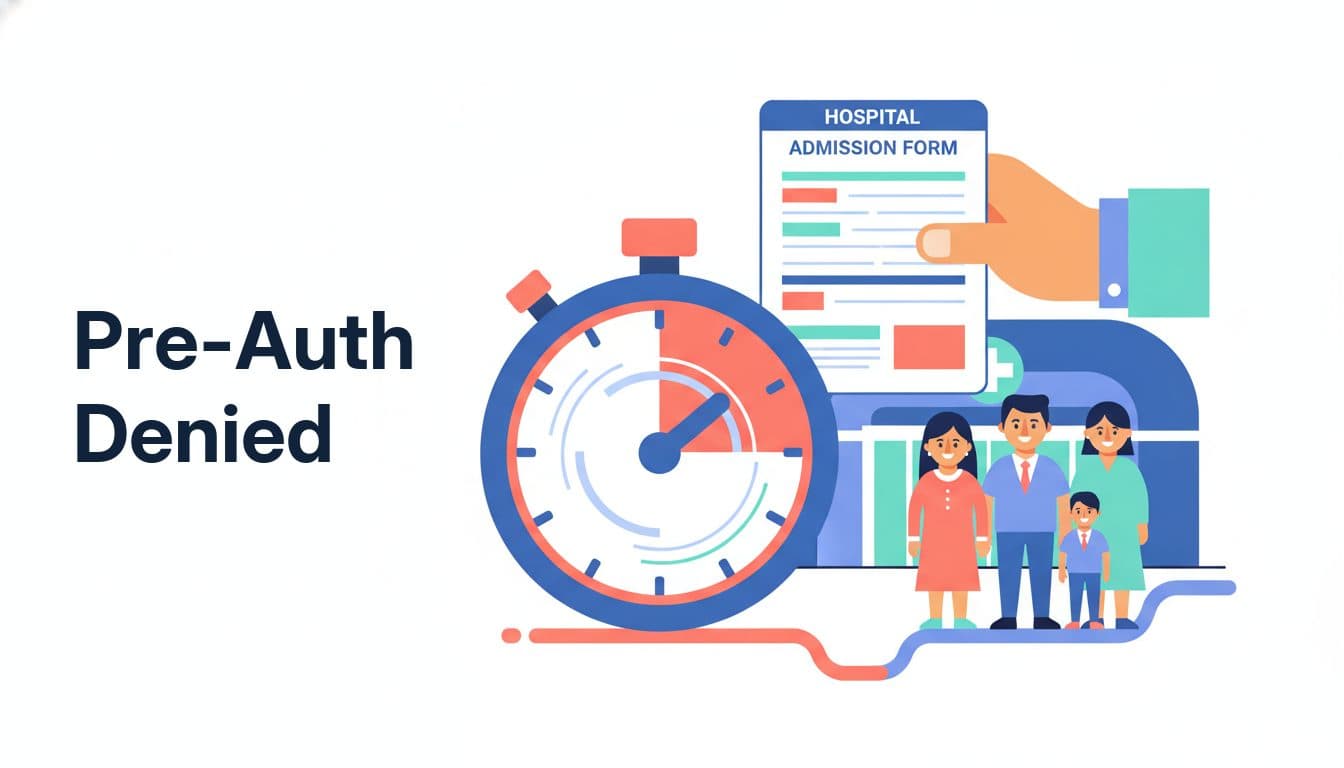
- Denial – treatment not covered (waiting period, exclusion, non-disclosure). You'll need to pay out of pocket and potentially dispute later.
Stage 3: During Hospitalization
What happens:
- Treatment proceeds as per the doctor's plan
- If costs exceed the pre-auth amount, the hospital requests an enhancement (additional approval)
- The insurer may send a surveyor for high-value claims (above ₹2–₹3 lakh typically)
What you should do:
- Track the running bill – ask for daily updates from the billing desk
- Keep all reports and prescriptions – everything the doctor gives you
- If enhancement is needed, follow up with the insurance desk to ensure it's submitted promptly
- Don't agree to room upgrades unless you're prepared to pay the difference
Enhancement process:
- Hospital identifies that costs will exceed pre-auth amount
- Hospital submits enhancement request with updated estimate
- Insurer reviews and approves/partially approves
- Regulatory deadline: 1 hour for a planned procedure, 3 hours in an emergency
Stage 4: Discharge and Settlement
What happens:
- Doctor approves discharge
- Hospital prepares the final bill with complete itemization
- Hospital submits the final bill to your insurer's TPA
- TPA reviews the bill against the pre-auth and plan terms
- Approved amount is confirmed – insurer will pay this directly to the hospital
- You pay only the non-payable items (toiletries, specific consumables), co-pay (if applicable), and any balance above approved amount
Common deductions you may need to pay:
| Item | Typical Amount |
|---|---|
| Non-payables (gloves, masks, syringes etc.) | ₹1,000–₹5,000 |
| Co-pay (if your plan has it) | 10–20% of total bill |
| Room rent difference (if you upgraded) | Proportionate deduction |
| Items not in approved list | Varies |
Documents to collect at discharge:
- Discharge summary (signed by treating doctor)
- Final itemized hospital bill
- Investigation reports (blood tests, scans, imaging)
- Pharmacy bills with prescription
- Implant/device invoices (if any stents, implants used)
- Payment receipt for any amount you paid
Stage 5: Post-Discharge Settlement
What happens after you leave:
- Insurer processes the final settlement within 7–30 days
- If you paid any amount that was covered, you can claim reimbursement for the difference
- If the insurer's final approved amount exceeds what they paid the hospital, you receive the balance
If there's a dispute:
- Contact your insurer's claim helpline within 7 days of discharge
- Submit any additional documents they request
- If unresolved, escalate to the grievance cell – read grievance process
- If still unresolved after 30 days, approach the Insurance Ombudsman – read ombudsman guide
Tips from Real Claims Experience
- Save the TPA helpline number in your phone now – not during an emergency. Four of the TPAs we cover, with their IRDAI registrations: Medi Assist (003), Paramount (006), FHPL (013) and Vidal Health (016).
- Take photos of all documents before handing originals to the hospital
- Ask for the pre-auth approval amount in writing – know exactly what's approved
- Don't sign blank discharge forms – read every document before signing
- Keep a claims folder – physical or digital – with all documents from each hospitalization
- Follow up proactively – don't assume the hospital will handle everything; check with the insurance desk daily
Back to: Health insurance claims guide | Cashless claim checklist
Need help with a cashless claim? Our advisors guide you through the claim process – from pre-auth to settlement. Free consultation.
FAQs – Cashless Claim Process
How long does a cashless claim take?
IRDAI requires the pre-authorisation decision within 1 hour for a planned admission and 3 hours in an emergency (Master Circular on Health Insurance Business, 29 May 2024). Final settlement after discharge takes 7–30 days. If a planned decision runs past the hour with no query raised, quote the deadline and ask for escalation.
What if my cashless claim is partially approved?
The hospital may ask you to pay the gap amount upfront. You can request an enhancement from the insurer or pay the difference and claim reimbursement later.
Do I need to pay anything in a cashless claim?
Yes – non-payable items, co-pay (if applicable), and room rent differences are typically borne by the patient even in cashless claims.
Can I switch from cashless to reimbursement mid-claim?
Yes. If the cashless process is delayed or partially denied, you can pay the hospital directly and file a reimbursement claim afterward.
What documents do I need for a cashless claim?
Policy e-card, photo ID, and your insurer's TPA details at admission. At discharge, collect the discharge summary, itemized bill, investigation reports, and payment receipts.

16+ years in financial services. Former investment banker at Bank of America, Kotak Investment Banking, and SBICaps, and ex-CFO of slice. Founder of nyvo and Principal Officer – IRDAI Certified.