First in India
Claim Support Guarantee, otherwise your money back.
Buy through nyvo and we get your claim passed, otherwise refund your premium. We are putting our money on our claim service.
Consumables in Health Insurance: What's Not Covered (2026)
Consumables are single-use items – gloves, syringes, PPE kits – your insurer won't pay. They add roughly 5–15% to bills; a low-cost rider covers them.

What are consumables in health insurance?
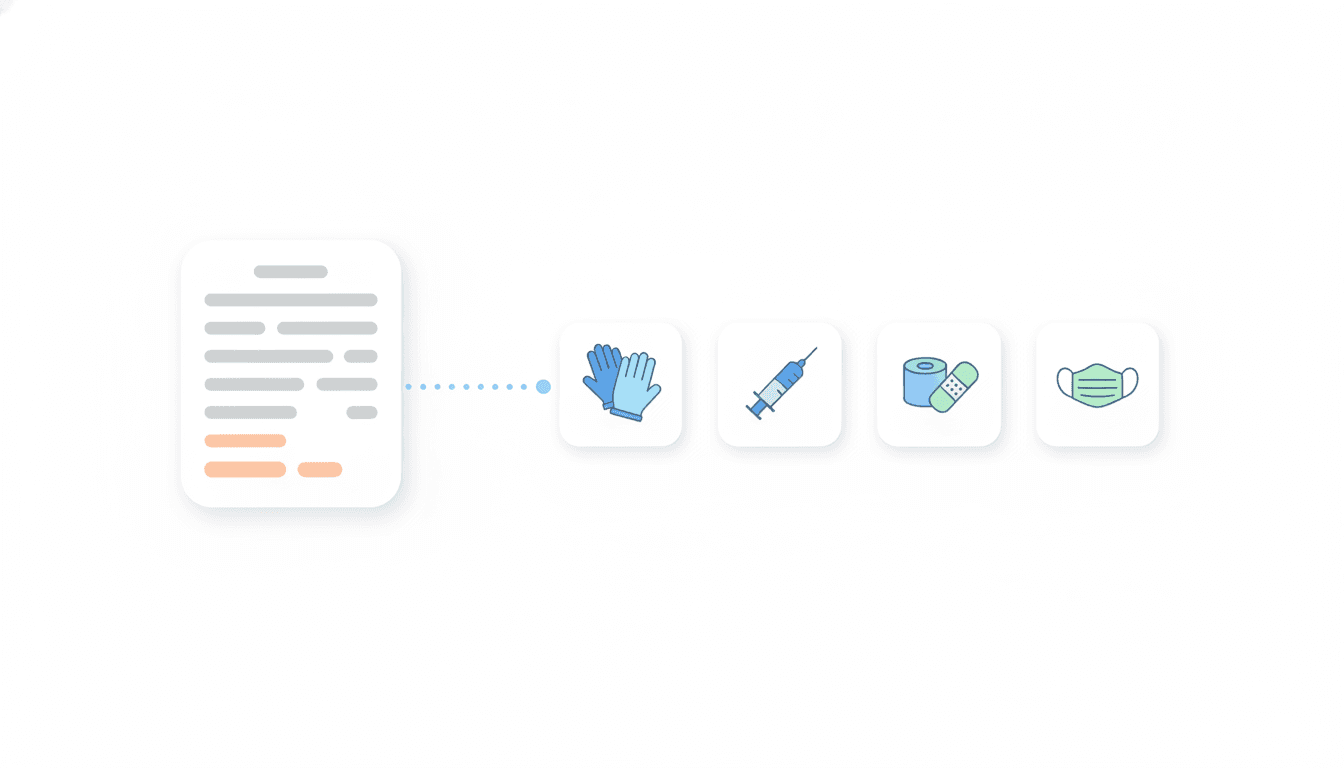
Consumables in health insurance are single-use medical items – gloves, syringes, masks, cotton, bandages, PPE kits – used during your treatment but classified as "non-payable items" under IRDAI's standardisation guidelines. Your insurer does not pay for them under a standard policy; the hospital bills them to you at discharge.
This surprises almost everyone the first time. You buy a ₹15 lakh policy, the surgery goes fine, the cashless approval comes through – and then the discharge desk hands you a bill for the items that were "consumed" during your stay. Not the surgeon, not the room. The gloves. The syringes. The admission kit you never asked for.
The COVID years made this visible in the worst way. PPE kits, masks and sanitisation charges showed up as chunky line items on hospitalisation bills, and families discovered at discharge that these fell outside their cover. That experience is a big reason consumables cover has since become one of the most recommended add-ons in Indian health insurance.
The stakes are not trivial. Per the National Health Account Estimates 2022–23, about 43% of India's health spending is still paid directly out of patients' pockets – and non-payable items are one of the quiet contributors that most policyholders never see coming.
What's on the non-payable list?
The exclusions aren't arbitrary. IRDAI publishes a standardised annexure of non-payable items, grouped into lists: optional items, items subsumed into room charges, items subsumed into procedure charges, and items subsumed into treatment costs. Insurers attach a version of this annexure to your policy wording. Here are the items you're most likely to meet on a real bill, grouped the way they show up:
| Group | Common items on your bill |
|---|---|
| PPE & procedure consumables | Gloves, masks, PPE kits, syringes, cotton, gauze, bandages, surgical tape, surgical blades, alcohol swabs |
| Admission & room kits | Gowns, caps, shoe covers, foot covers, hand wash, disinfectant lotions, toothbrush-and-comb admission kits, bed pans |
| Toiletries & personal items | Tissues, slippers, toiletries, mineral water, food for attendants, laundry, TV, phone and internet charges |
| Documentation & admin charges | Registration and admission fees, documentation and record charges, blood reservation charges, dietician fees |
Grouped from IRDAI's standardised list of non-payable items. The exact annexure varies by policy – always check your own policy wording.
Individually these are ₹50 and ₹200 entries. The problem is volume: a three-day surgical stay can burn through dozens of gloves, multiple syringes and cannulas, and daily dressing changes. The line items multiply quietly, and they all land on your side of the bill.
How much do consumables cost you in a real claim?
Industry estimates put non-payable items at roughly 5–15% of a hospital bill, depending on the procedure and length of stay. For surgeries above ₹2 lakh, paying ₹15,000–25,000 extra out of pocket is common. Consumables-heavy procedures – orthopaedic surgeries, ICU stays, anything with repeated dressings – sit at the top of that range.
Here's a documented claim that shows how it plays out. A patient underwent ACL reconstruction surgery with a ₹10 lakh sum insured and a three-day hospital stay:
| Bill item | Amount | Who pays |
|---|---|---|
| Room & nursing (3 days) | ₹24,000 | Insurer |
| OT charges & surgeon fees | ₹1,05,000 | Insurer |
| Medicines & diagnostics | ₹28,500 | Insurer |
| Implants | ₹37,500 | Insurer |
| Consumables (sutures, cannulas, syringes, disposables) | ₹45,000 | You – unless covered |
| Total bill | ₹2,40,000 | – |
Documented claim reported by an insurance advisory platform: ACL reconstruction, Delhi, ₹10 lakh sum insured. The patient had bought a consumables add-on for ₹697 a year – the insurer paid the full ₹45,000.
Read that again: nearly 19% of this bill was consumables. With the add-on, the patient paid nothing for them. Without it, a ₹10 lakh policy would still have left ₹45,000 on the table – roughly 65 years' worth of that rider's premium, gone in a single claim.
And this applies to cashless claims too. Cashless means the insurer settles the covered portion directly with the hospital. It does not mean the bill is fully paid. The non-payable portion is separated out and billed to you at the discharge desk – usually the first time you learn these items exist.
Why do insurers exclude consumables?
It feels unfair – the hospital wouldn't operate without gloves, so how are gloves "non-medical"? But the standardised exclusion exists for three practical reasons:
Reasonable logic – but it puts the cost on you. Which is exactly why insurers now sell the fix separately.
We'll read your policy's non-payable annexure for you
A nyvo advisor will check whether your plan covers consumables, what the rider costs on your exact profile, and whether it's worth adding at your next renewal. Free, and genuinely no spam.
Consumables cover riders: how they work and what they cost
A consumables cover (also sold as a "non-medical expenses" benefit) extends your policy to pay for the items on the annexure list – provided your underlying hospitalisation claim is admissible. Some plans build it into the base policy; others sell it as an optional rider you add at purchase or renewal. Here's how six plans handle it, as recorded in nyvo's policy database:
| Plan | Consumables feature | Type |
|---|---|---|
| HDFC ERGO Optima Secure / Optima Secure Plus | Protect Benefit | Built-in |
| Aditya Birla Activ One MAX | Claim Protect | Built-in |
| Star Health Assure | Consumables cover in base policy | Built-in |
| Care Supreme | Claim Shield (68 listed items); the wider Claim Shield+ comes with the separate Care Advanced add-on | Add-on |
| Niva Bupa ReAssure 3.0 Black | Claim Safeguard+ | Add-on |
| ICICI Lombard Elevate | Claim Protector | Add-on |
From each plan's policy wording, prospectus or brochure, as recorded in nyvo's policy database. Feature names and scope change between versions – verify against the insurer's current policy wording before buying.
What does it cost? Typically about 8–10% of your base premium. In documented pricing examples, the add-on came to roughly ₹700–1,300 a year for a 25-year-old on a ₹15 lakh cover, and around ₹5,000–7,000 a year for a senior citizen couple. Set against ₹15,000–45,000 of consumable charges in a single surgical claim, it's one of the cheapest pieces of protection in the market.
The fine print that matters: the cover applies only to items listed in your policy's annexure, and only when the underlying claim is admissible. Even with the rider, purely personal expenses – outside food, mineral water, TV and internet charges, grooming services, and take-home devices like thermometers or nebulisers – generally stay excluded. And the usual policy machinery (sum insured limits, co-pays, room-rent caps, sub-limits) still applies on top.
Plan features described here are as published by the insurers at the time of writing and change between product versions. Confirm the detail against the current policy wording before you buy.
Consumables add-on: should you buy it or skip it?
Buy the consumables add-on if your plan leaves consumables out, because the hospital otherwise bills those items to you at discharge, cashless claim or not. Skip it if your plan already includes them. Of nyvo's four featured plans, HDFC ERGO Optima Secure Plus and Aditya Birla Activ One MAX include consumables in the base plan, while Care Supreme and Niva Bupa ReAssure 3.0 Black sell them as an add-on.
| Featured plan | Consumables in the base plan? | What to add |
|---|---|---|
| HDFC ERGO Optima Secure Plus | Yes, through the built-in Protect Benefit | Nothing |
| Aditya Birla Activ One MAX | Yes, through the built-in Claim Protect, which pays every non-payable item across all four lists of the policy annexure on an admissible claim | Nothing |
| Care Supreme | No | A paid add-on that pays the 68 listed non-payable items, or its wider version, sold under the separate Care Advanced add-on policy, which covers Lists I to IV. You can hold one or the other, not both |
| Niva Bupa ReAssure 3.0 Black | No | Claim Safeguard+, a paid option that pays every non-payable item across Lists I to IV |
From each plan's policy wording or prospectus, as recorded in nyvo's policy database (Optima Secure Plus UIN HDFHLIP26058V082526; Activ One UIN ADIHLIP24097V012324; Care Supreme UIN CHIHLIP27061V032627; ReAssure 3.0 UIN NBHHLIP26047V012526).
- Skip it on a plan that builds consumables in. Check the variant on your quote, though: Activ One MAX includes Claim Protect, but on the Activ One NXT variant it is a paid option.
- Buy it on a plan that leaves consumables out. Without it, the non-payable items on a settled claim are yours to pay, on a cashless or a reimbursement claim alike; with it, they are paid only when the underlying claim is admissible.
- Check how much of the list it pays. Care Supreme's narrower add-on pays 68 listed items, while its wider version and ReAssure 3.0 Black's Claim Safeguard+ cover all four lists of the non-payable annexure.
- Compare total premiums, not base premiums. Price a plan that leaves consumables out together with its add-on before you set it against a plan that builds them in.
How to claim smart: reducing what you pay for consumables
Whether or not you have the rider, a few habits will keep the discharge-desk surprise small:
One more quiet benefit: since the rider is billed with your base premium, the combined amount is generally eligible for deduction under Section 80D of the Income-tax Act, 1961 (section 126 of the Income-tax Act, 2025, from tax year 2026-27), within the usual limits, if you file under the old tax regime.
FAQs
What are consumables in health insurance?
Consumables are single-use medical items such as gloves, syringes, masks, cotton, bandages and PPE kits used during hospitalisation. IRDAI's standardised list of non-payable items allows insurers to exclude them from standard policies, so the hospital bills them to you directly at discharge unless your plan has a consumables cover.
How much do consumables add to a hospital bill in India?
Industry estimates put consumables and other non-medical charges at roughly 5–15% of the final bill, depending on the procedure and length of stay. For surgeries above ₹2 lakh, ₹15,000–25,000 in out-of-pocket non-payable charges is common, and consumables-heavy surgeries can run higher.
Do I have to pay for consumables even in a cashless claim?
Yes. Cashless only means the insurer settles the covered portion of the bill directly with the hospital. Non-payable items such as gloves, syringes and admission charges are billed to you separately at discharge unless your policy includes a consumables benefit or rider.
Is a consumables cover rider worth the cost?
Usually, yes. The rider typically adds about 8–10% to your base premium – in documented examples, roughly ₹700–1,300 a year for a young adult – and can cover tens of thousands of rupees of consumable charges in a single surgical claim.
What is still not covered even with a consumables rider?
Purely personal expenses generally stay excluded: outside food, mineral water, TV and internet charges, grooming services, and take-home devices like thermometers or nebulisers. Cover is limited to the items listed in your policy's annexure, so check that list rather than assuming everything is included.
Does a consumables rider premium qualify for tax benefit under Section 80D?
Generally, yes, if you file under the old tax regime. Because the rider is billed along with your base health insurance premium, the combined amount is typically eligible for deduction under Section 80D (section 126 from tax year 2026-27) within the applicable limits for your age and family structure. Confirm your specific case with a tax advisor.
Book a call for advice on the best policy for you and your family
A salaried, IRDAI-certified nyvo advisor will look at your cover, flag the gaps that matter, and tell you plainly what to fix. No commission, no pressure.
A first in India
Buy policy from nyvo insurance with Claim Support Guarantee, otherwise money back.

16+ years in financial services. Former investment banker at Bank of America, Kotak Investment Banking, and SBICaps, and ex-CFO of slice. Founder of nyvo and Principal Officer – IRDAI Certified.